Computing In -- And Beyond -- Chemical Education
A Personal View
by
Carl H. Snyder
Professor of Chemistry Emeritus
University of Miami
Carl H. Snyder
Professor of Chemistry Emeritus
University of Miami
My introduction to computing came in 1984 with an IBM 8088 PC carrying two 5 1/4" floppy drives: one to read from a program floppy, the other to write to a storage floppy. At the time PCs didn't yet come with hard drives. You booted from a floppy holding the operating system, DOS 3.1 back then.
At first I used a computer as a glorified combination of a typewriter, a desk calculator and a file-storage cabinet, that operated with two and only two programs. The one I used for typing documents was a rudimentary version of WordPerfect that, for example, didn't even bother to highlight the blocks of text selected to be moved, copied, or deleted. For calculations and numerical student records I had an early version of Quattro, an ancient spreadsheet program. I still use DOS versions of both of these, even with today's Windows XP machine. It's a matter of personal taste and, with WordPerfect, an ability to search documents for format coding.
When the World Wide Web came along Mosaic became my first browser. According to Wikipedia,
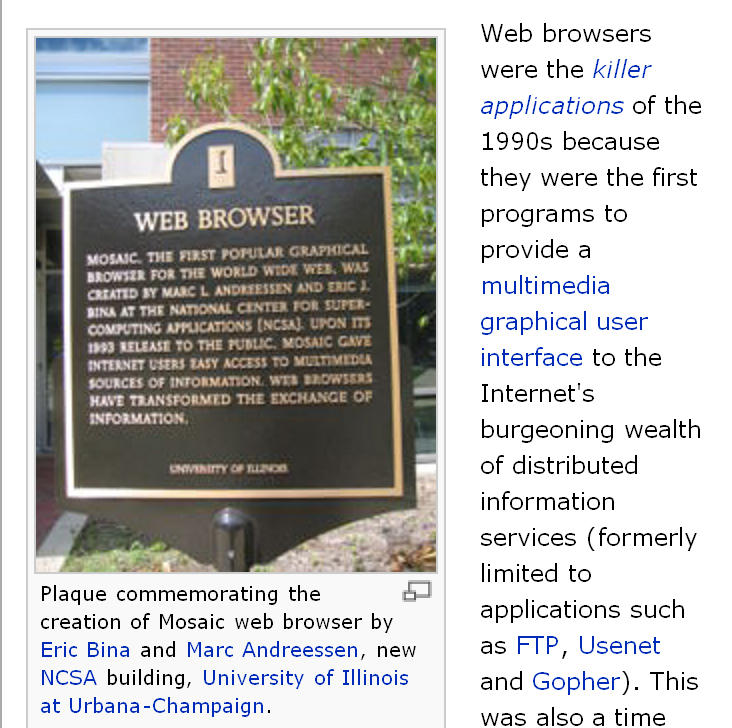
Mosaic was released to the public in 1993 and had an active life of about three years. After that came Netscape. I relate all this simply to give authenticity to my stature as a grizzly old-timer in the use of computing in chemical education.
When UM acquired email facilities I jumped in enthusiastically and expanded my horizons beyond typing and calculating. Two motivating factors were to encourage communication between students and me, outside the classroom and beyond office hours -- in what is now known as asynchronous communication -- and a desire to introduce students to this marvelous new technology of electronic mail.
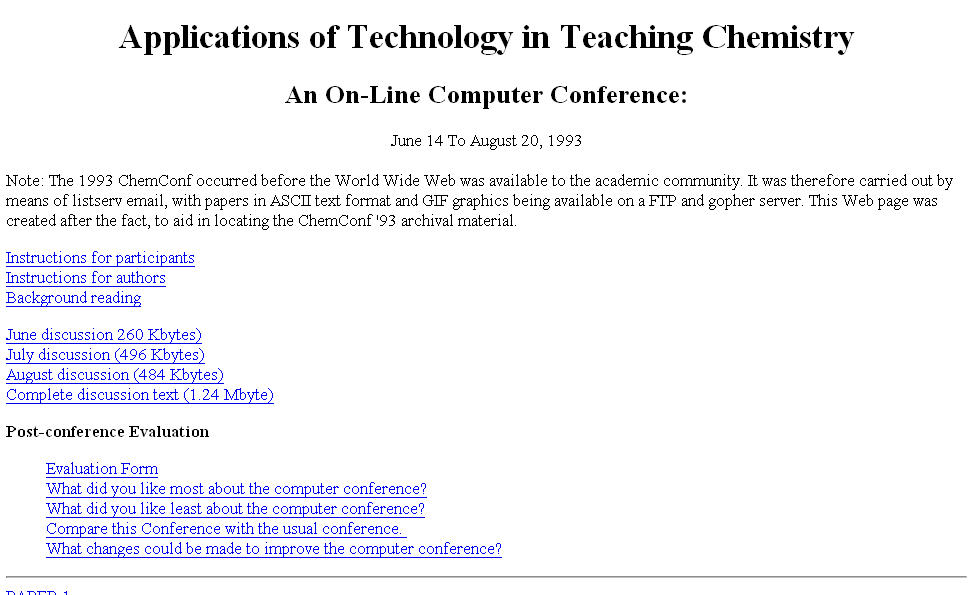
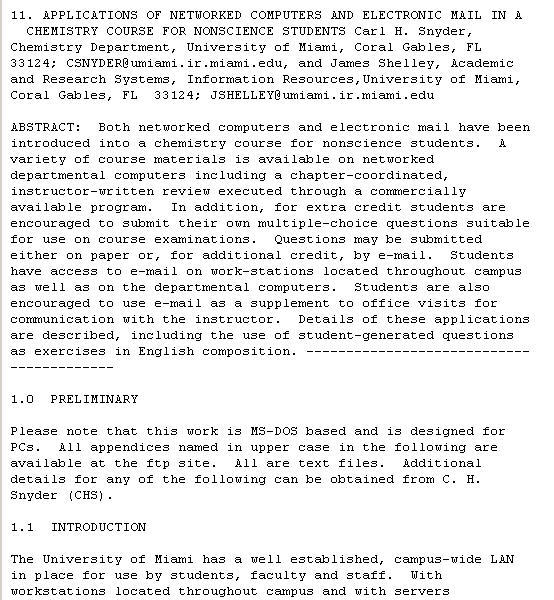
To begin the work Jim Shelley, a colleague in UM's division of Information Resources (now Information Technology), and I set up a networked system that allowed us to introduce electronic mail into a class of chemistry for nonscience students, CHM 101. This resulted in a 1993 ChemConference paper, "Applications of Networked Computers and Electronic Mail in a Chemistry Course for Nonscience Students," still available as Paper 11 at www.wam.umd.edu/~toh/ChemConference/. You'll find all the details there. (ChemConference was the original name of ConfChem.)
In 1997, with increasing experience, confidence and enthusiasm about computing in chemical education, I became the first in UM's College of Arts & Science to offer a distance education course. (A member of UM's School of Business preceded me by one year. Both courses, mine and the earlier one, were administered by UM's School of Continuing Studies.)
As before, the course chosen was the one for nonscience students, CHM 101. We used a collaborative communications program, NetMeeting. A combination of novelty and success led to presentation of another ConfChem paper, "An Innocent Tries Distance Education," available at www.chem.vt.edu/confchem/1999/b/snyder.
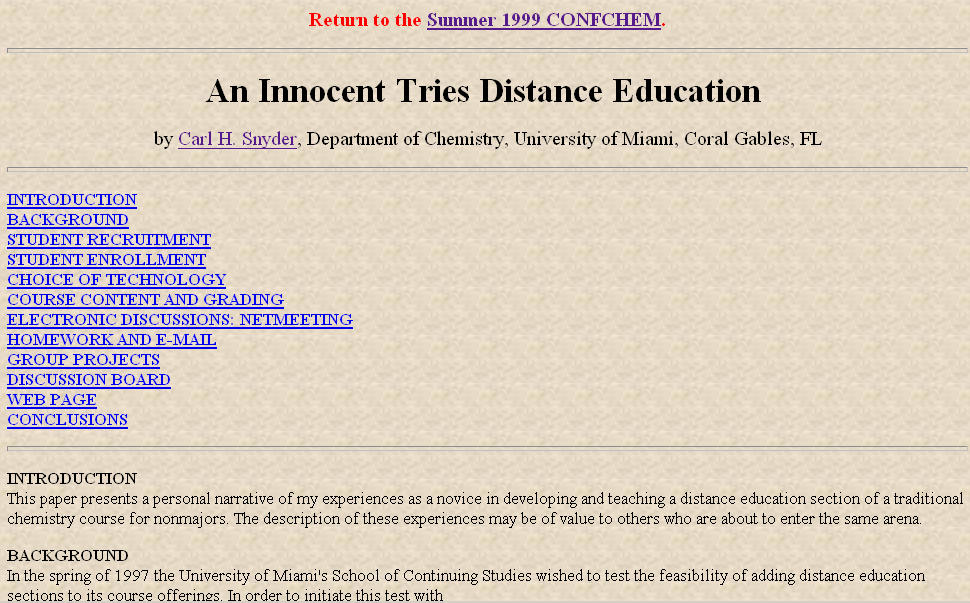
These two areas of interest -- electronic communication and distance education -- had different fates. On their own, email and electronic communication in general became dominant factors in computing in chemical education. But for chemistry courses at UM, distance education died a quiet death. With complexities in giving examinations and with a low registration for the initial offering, UM's School of Continuing Studies showed no interest in repeating the course.
Still another innovation had mixed success. In 1998 a group of chemistry colleagues and I initiated a new, team-taught course, Computing in Chemistry, CHM 256. Our goal was to introduce advanced undergraduates to a variety of computer applications in chemistry, including spreadsheet calculations, web-based research, web-page creation, email newsgroups, molecular modeling, etc. The course lasted six years. A variety of factors led to its termination, including faculty departures, tightening teaching loads and a persistently low enrollment, roughly half a dozen students.
Through all this I focused on two areas of classroom instruction in my standard courses (organic chemistry and chemistry for nonscience students): PowerPoint presentations and web-page creation.
For myself, I used the PowerPoint presentations as highly elaborate lecture-notes that were projected in class to guide us through the content of the course. Their appeal is that they
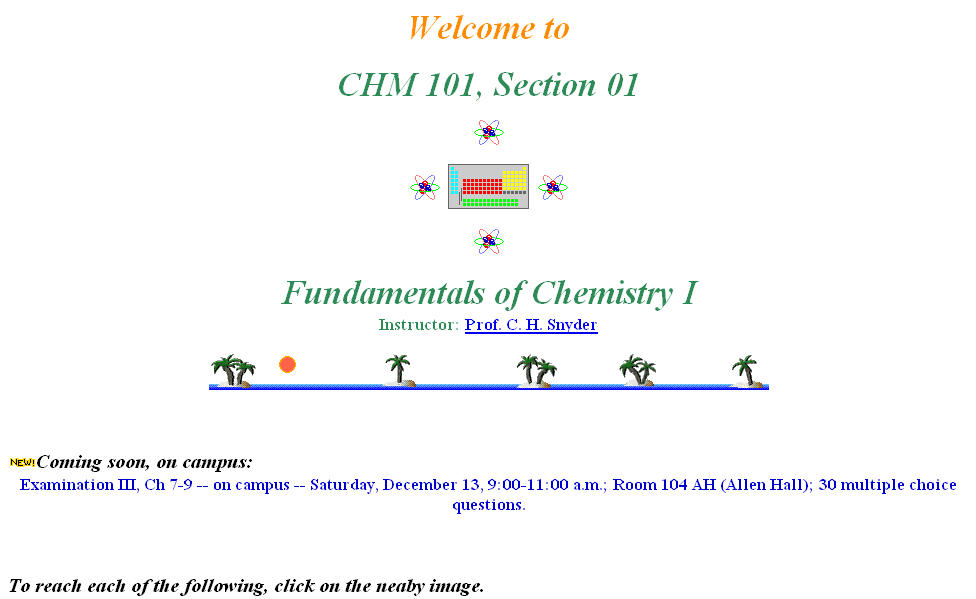 extended variety in their use and in reference to a wealth of
material in and beyond the classroom. You can find one for the
CHM 101 course in the "Web Page" section of "An Innocent Tries
Distance Education" (above) or by going directly to
www.chem.vt.edu/confchem/1999/b/snyder/web.htm. Please note that
some of the links in this and the following pages are no longer valid.
extended variety in their use and in reference to a wealth of
material in and beyond the classroom. You can find one for the
CHM 101 course in the "Web Page" section of "An Innocent Tries
Distance Education" (above) or by going directly to
www.chem.vt.edu/confchem/1999/b/snyder/web.htm. Please note that
some of the links in this and the following pages are no longer valid.
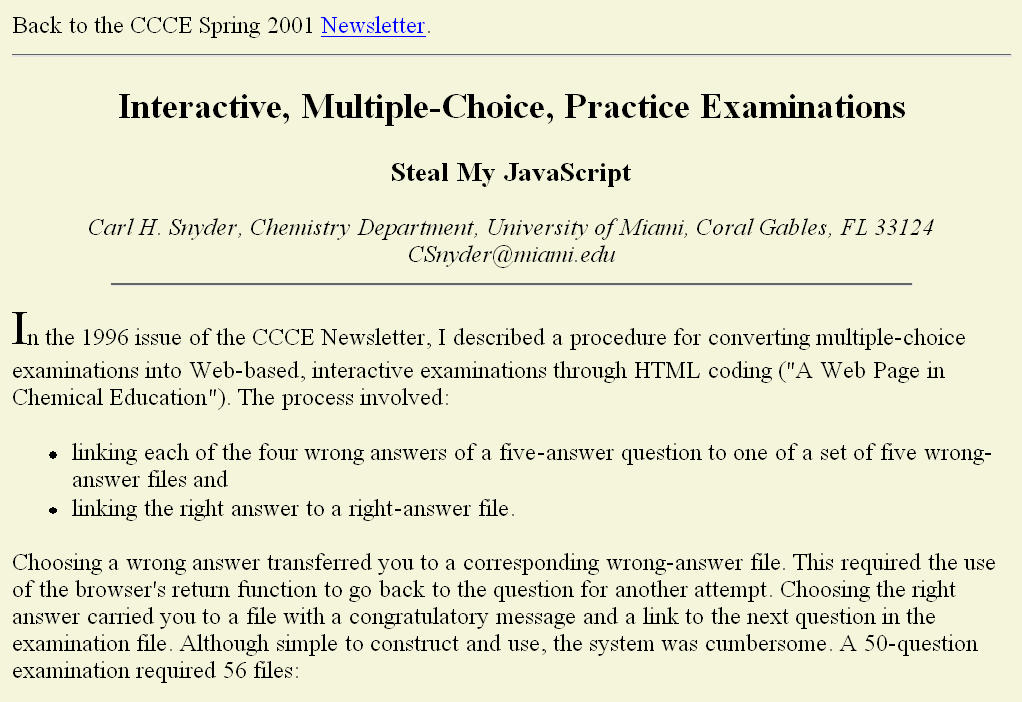
A continuation of web-page development applied JavaScript to simplify the creation of multiple-choice practice examinations. This was published as "Interactive, Multiple-Choice, Practice Examinations -- Steal My JavaScript" in the Spring, 2001, issue of the Newsletter.
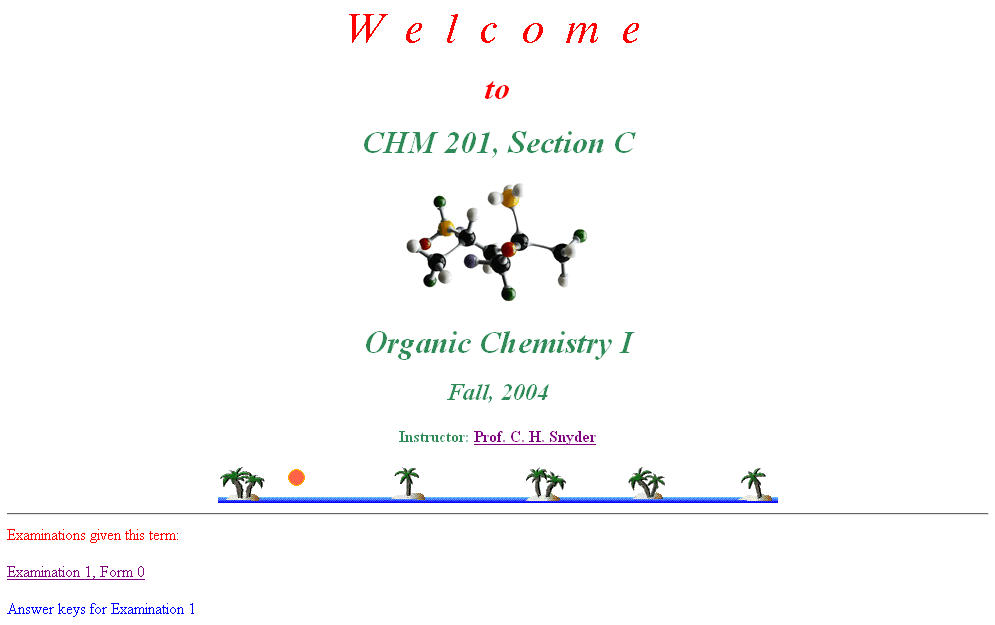
My most recent web page, created just before retirement, was for a course in organic chemistry, CHM 201.
In a transition between full time faculty service and retirement,
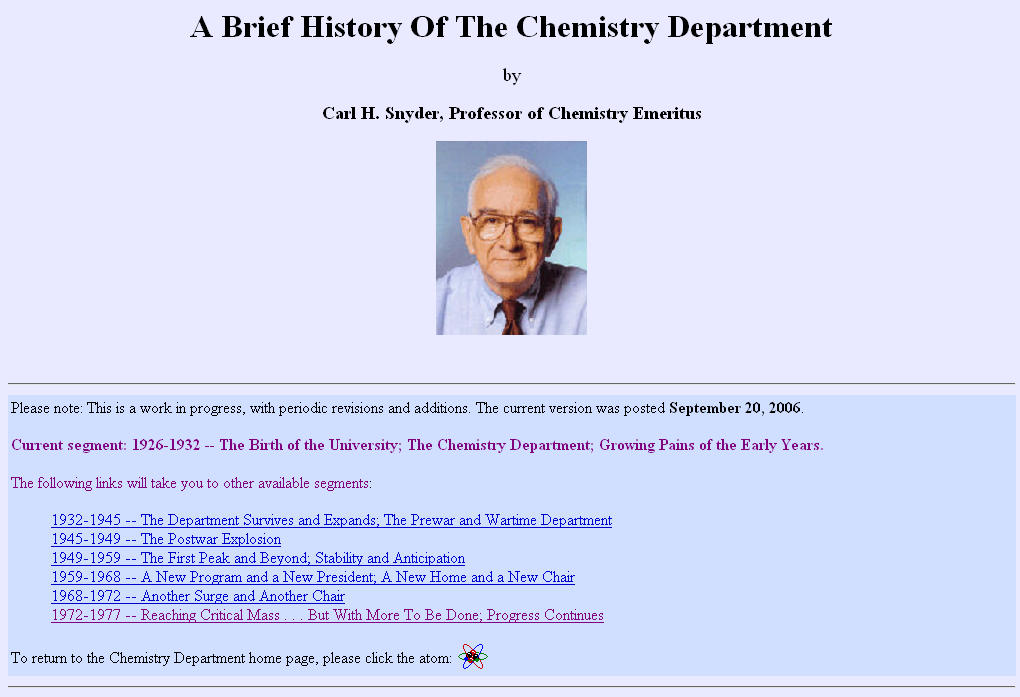 shortly
before I left the department I began work on a web-based history of the UM chemistry department. Although work has continued since I retired, there's
still much more to be done before I consider my own contribution
ended. You can find it at
www6.miami.edu/chem/history/.
shortly
before I left the department I began work on a web-based history of the UM chemistry department. Although work has continued since I retired, there's
still much more to be done before I consider my own contribution
ended. You can find it at
www6.miami.edu/chem/history/.
And now, Retirement (which I like to capitalize).
Currently I have three major, computer-related projects in active progress:
(As an illustration, I have organized well over a thousand 35 mm slides my uncle took, many from his various exotic vacations, scanned them into digital files and created appropriate web pages. I've done the same with a smaller number of photographs from my wife's family but must leave the rest of it to her.)
Correlating all these historical materials with my own family memories and recording them, in words and in digital files, seems to me a valuable retirement activity. The format of my approach follows a thematic scheme rather than the linear chronology of the departmental history. For example, the three family segments now completed are:
For those of us about to retire I'll finish by suggesting that (in my computer-oriented view) one of the most rewarding ways to use our newly freed time is by insuring that at least some of our families' histories might live on in an organized, digital format for those who come after us.
If you have any questions or comments, please send them to csnyder@miami.edu.