Reptile and Amphibian Evolutionary Ecology, Urban Ecology, Ecological Education Associate Professor, Widener University, Science Division, Faculties of Biology and Environmental Science One University Place, Chester, PA 19013, voice: 610-499-4017, fax: 610-499-4496, email: bwgrant@widener.edu |
|
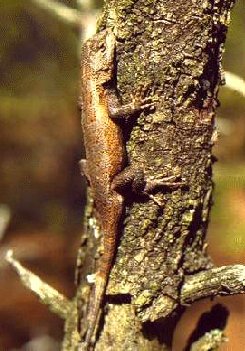
Population Ecology Studies of Eastern Fence Lizards, Sceloporus undulatus, in the New Jersey Pine Barrens
In Summer 2007, my students and I restarted field studies in the heart of the NJ Pine Barrens on a 4.5 hectare site near Tabernacle, NJ. This is the same site that
Widener students and I worked from 1994 to 1998 during which we captured or recaptured 553 lizards (211 unique), and recorded 1272 observations of lizard home ranges and social
interactions. NJ Fence Lizards exhibit unique life histories compared to populations studied elsewhere (slow individual growth rates, delayed sexual maturity,
females larger than males). Data also show the huge effects of El Niño years on these lizards that reveal the
complex challenge of biodiversity conservation amidst climate change. This is a very exciting project, and things now are very different -- the population has
crashed, possibly due to the recent spate of severe El Niños in the last few winters?!? *** Interested ? *** I need student collaborators for 2009-2010 (especially spring 2010).
Please email me at bwgrant@widener.edu to get involved. Freshmen are welcome! |
|
|
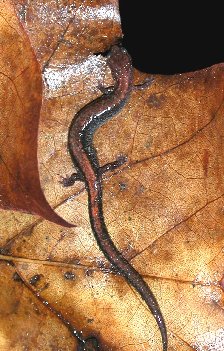
Population Ecology Studies of Red-Backed Salamanders, Plethodon cinereus, in Delaware County, PA
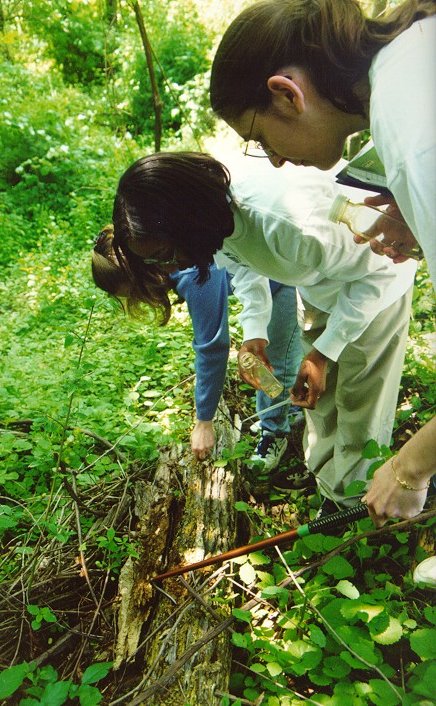
Red-Backed Salamanders, Plethodon cinereus, are among the most common vertebrates in urban forests in eastern North America. In all but the most heavily
impacted forest or woodlot, P. cinereus numbers can reach hundreds per hectare, and they are often the dominant invertebrate-eating animal in ecological food chains.
Despite extensive population studies of P. cinereus in rural or wilderness areas, almost nothing is known about their life history and population ecology in urban areas.
In fall 2006, my students and I began studies of a population in Houston Park, only one mile from Widener. The goals of this project are -- what are salamander population
sizes, where do they live and breed, what life histories have evolved in these populations as potential adaptations to environment, and how might these populations respond in
evolutionary time to presently occurring landscape and climate change? *** Interested ? *** I need student collaborators who are interested in field ecology for
2009-2010 (especially spring 2010).
Please email me at bwgrant@widener.edu to get involved. Freshmen are welcome! |
|
|
Urban Ecosystems: The New Frontier in Ecological Research
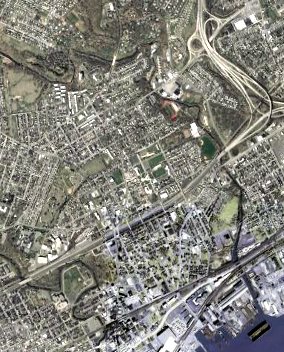
We all live in the dominant ecosystem type on the Earth today -- urban ecosystems. Currently, more than half of humanity lives in
urban ecosystems, and the ecological effects of urban ecosystem resource demands (energy, water, and materials) extend widely to
all other ecosystem types. Urban ecosystem ecology has been the principal research focus of a wide range of the courses I teach --
from Freshman Introductory Biology (Bio161) to my upper level Ecology and Conservation Biology courses. Projects have examined
urban effects on terrestrial and aquatic plant and animal biodiversity, and may of these course-based projects have led to follow-up research
independent projects and student presentations on and off campus. *** Interested ? *** I need student collaborators who are interested in urban ecological research (field or lab) for
2009-2010 (especially spring 2010).
Please email me at bwgrant@widener.edu to get involved. Freshmen are welcome! |
|
|
Bioenergetics Research on Energy Budgets and Life Histories of Reptiles and Amphibians
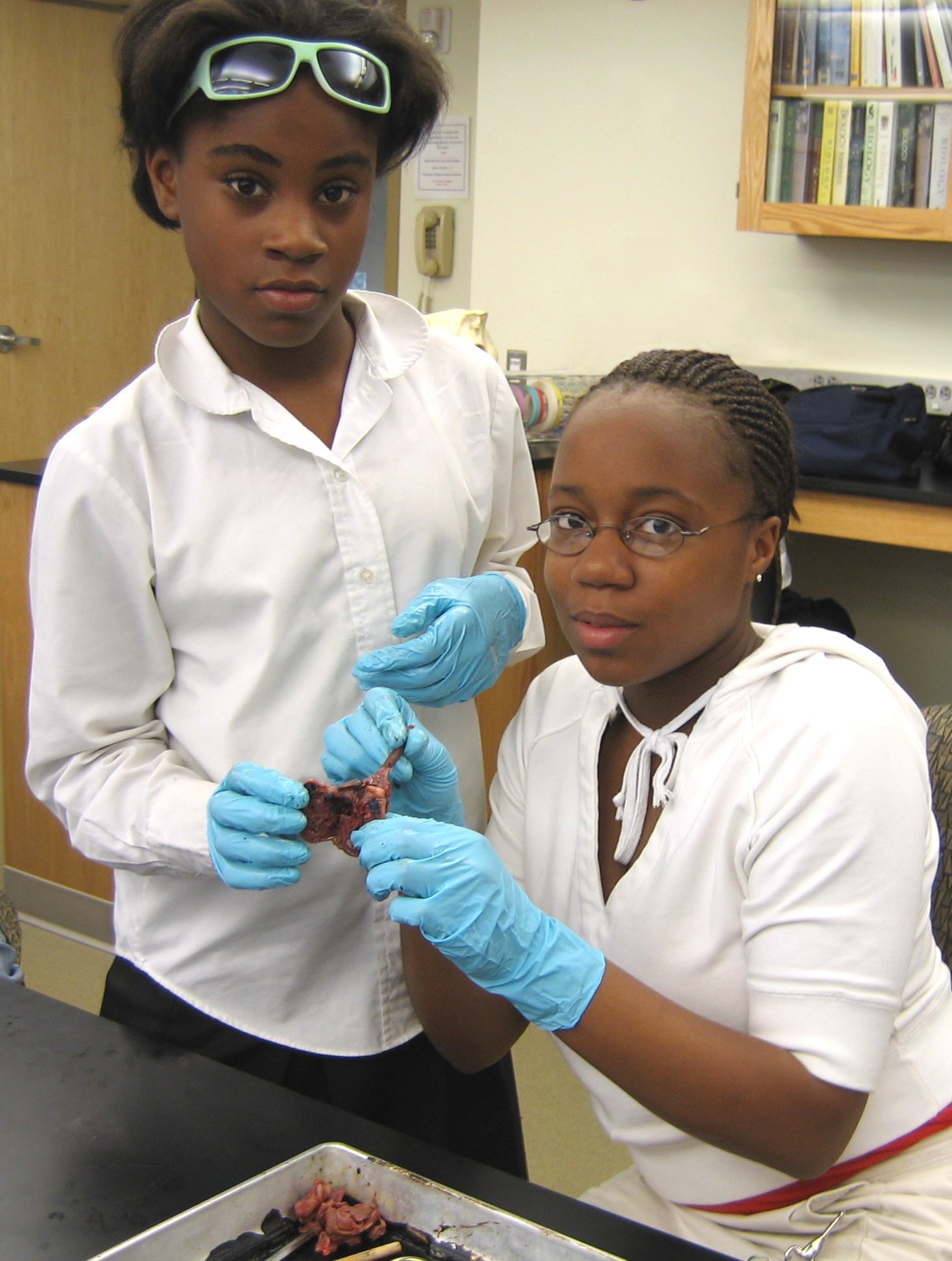
These studies are in collaboration with Dr. Itzick Vatnick (at right), with whom I have co-taught courses and collaborated on bioenergetics research projects since 1993 when
we both arrived at Widener. We have a Sable Systems oxygen and carbon dioxide analysis system capable of whole-organism metabolism under controlled temperature
conditions, and data from this apparatus has led to dozens of faculty*student collaborative projects, off campus presentations, and publications over the past decade.
My interests are in understanding metabolism, food processing, and life history energy allocation in three separate study systems for each of which I have field projects
previously described: Eastern Fence Lizards (Sceloporus undulatus), Fowler's Toads (Bufo fowleri), and Red-Backed Salamanders (Plethodon cinereus). *** Interested ? *** I need student collaborators who are interested in physiological ecology for
2009-2010 (especially spring 2010).
Please email me at bwgrant@widener.edu. Freshmen are welcome! |
|
|
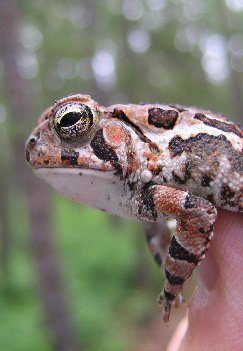
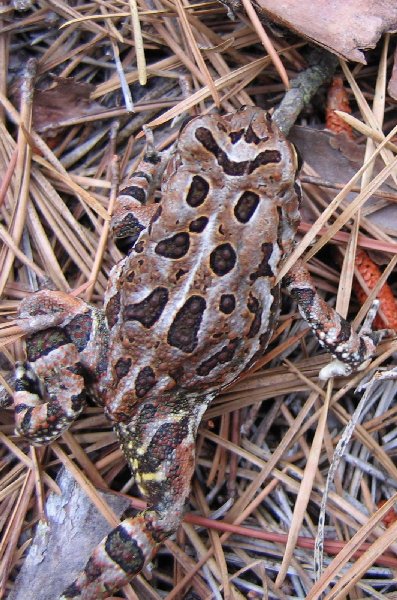
Population Ecology Studies of Fowler's Toads, Bufo fowleri, in the New Jersey Pine Barrens
In Summer 2007, as my students and I restarted field studies on Eastern Fence Lizards (Sceloporus undulatus) in the heart of the NJ Pine Barrens in
Tabernacle, NJ (see above), we noticed that the site was quite literally hopping with toads. I have never seen numbers as large as these, but that isn't the only
surprising thing. Remember, toads lay eggs in water, and all of the standing water in the Pine Barrens is highly acidic (pH's around 4.5), which causes acid death
for amphibians in our area of PA. So, let's find out "why" there are so many Fowler's Toads in the Pine Barrens -- where do they live and breed, what life histories
have evolved in these populations as potential adaptations to environment, and how might these populations respond in evolutionary time to presently occurring
landscape and climate change? This is a brand new and very exciting project for us to begin. *** Interested ? *** I need student collaborators who are interested in field ecology for
2009-2010 (especially spring 2010).
Please email me at bwgrant@widener.edu to get involved. Freshmen are welcome! |
|
|
Behavioral Ecology Studies of Soil Acidity Preferences by Fowler's Toads, Bufo fowleri, in a Lab pH Gradient
Fowler's Toads, Bufo fowleri, are the common toad in the New Jersey Pine Barrens on my research site for Eastern Fence Lizards.
The Pine Barrens exhibit highly acidic sandy soils and surrounding bogs (pH = 4 to 5) where toads live and breed. Yet, it is widely known that environmental
acidification causes amphibian decline elsewhere, and published research by Widener Faculty and Students has shown that compromised immune systems due to acidity
can be an important cause of death. I ask -- how are these toads able to survive and breed in the high acidity in the heart of the Pine Barrens?
Do the toads distinguish between and orient either towards or away from acidic soil conditions? To address these questions, I use a simple soil pH choice apparatus in lab.
By recording toad movements, one can test hypotheses about orientation behavior and pH preferences. *** Interested ? *** I need student collaborators who are interested in behavioral ecology in lab for
2009-2010 (especially spring 2010).
Please email me at bwgrant@widener.edu to get involved. Freshmen are welcome! |
|
|
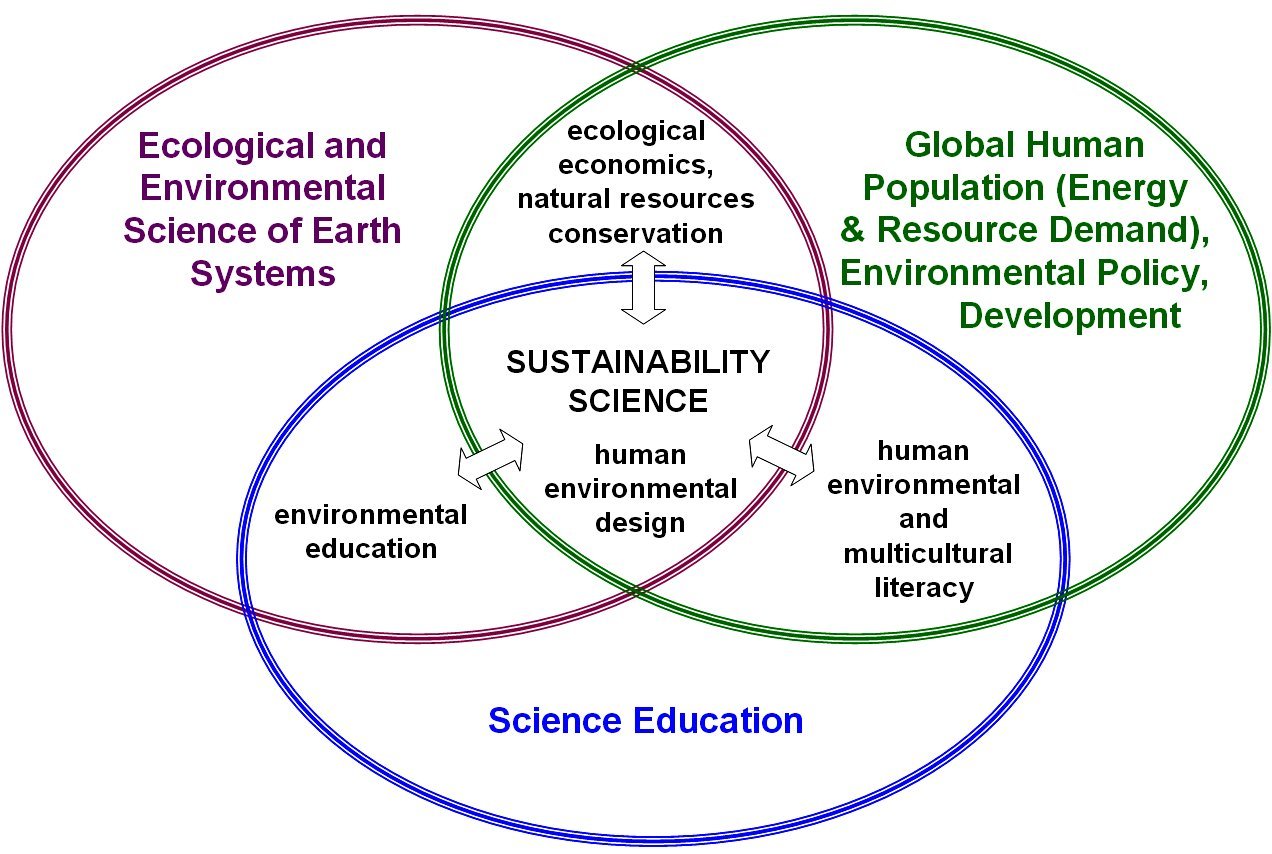
Environment, Energy, and Sustainability Science: An Institute for 21st Century Teacher Leaders
I am co-PI with Steve Madigosky, Victor Donnay (Bryn Mawr), and 4 others on an NSF funded MSP Start Partnership
(Oct 2008 – Sept 2010, $300,000) to create an Environment, Energy, and Sustainability Science (ES)2
Teacher Leader Institute from which teachers will earn a Masters Degree in Sustainability Science Education.
Building on the MSP of Greater Philadelphia, we will bring together faculty and
resources from multiple |
|
|
institutions (a “Mega-University” model) to develop a coherent, innovative, and content-rich,
multi-year curriculum in environment, energy, and sustainability science for Middle and High School teachers that will: (A) improve their STEM content knowledge in areas critical to human environmental sustainability, (B) improve their use of project based/service learning and scientific teaching pedagogies in their teaching, (C) engage in real-world sustainability problem solving in an “externship” with a local business, non-profit or government organization that is active in the newly emerging green economy, and (D) develop important leadership skills as change agents in their schools. ..all of which will improve student interest, learning, and engagement in STEM education, strengthen workforce development pipelines in the rapidly developing regional "green collar" economy, and simultaneously support positive social change toward environmental sustainability and citizenship. *** Interested ? *** ...please email bwgrant@widener.edu. Freshmen are welcome! | |
|
Practitioner Research in Ecological & Science Education
Practitioner research is a teacher*researcher paradigm that uses scientific evidence to measure the effects of curriculum and instruction on student learning.
In other words -- what is the evidence that students are learning as a result of teaching?
Since coming to Widener in 1993, I have used and developed new methods in inquiry-based instruction through practitioner research
to improve my teaching and my students'
learning in all of my courses: freshman to senior. *** Interested ? *** in practitioner research in ecological education?
please email bwgrant@widener.edu.
Freshmen are welcome! |
|
|
Using Large Scale Ecological Data to Teach Ecology
Collaborators Teresa Mourad (Ecological Society of America - ESA) and
Wendy Gram (National Ecological Observatory Network - NEON) and I recently were awarded an NSF Grant for a
Distributed Graduate Seminar from the National Center for Ecological Analysis and Synthesis (NCEAS) at UCSB, to
develop curricula to use large scale ecological data to teach the basics of ecology in undergraduate courses.
In July 2009, we held a week-long workshop at NCEAS, with 12 other faculty we invited from around the country,
where we designed the framework and scope of these activities.
New activities range from teaching the global carbon cycle, the proliferation of invasive species and diseases, how land use change
affects avian migration, the effects on polar bears and arctic ecosystems of sea ice loss, etc.,
-- all using large scale publically accessible data bases and primary ecological literature.
Over the next year we will be beta-testing these activities in our classes, and we will reconvene
@ NCEAS in fall 2010 -- to which two Widener students will be invited, too!
Lastly, these activities will hopefully be published in ESA's peer-reviewed ecological educational journal TIEE
(Teaching issues and Experiments in Ecology, http://tiee.ecoed.net
) that I and others created over the past decade.
*** Interested ? *** Using Large Scale Ecological Data to Teach Ecology
and going to NCEAS next fall? please email bwgrant@widener.edu.
Freshmen are welcome! |
|
|
Academic Service Learning: Researching a New Pedagogy to Teach Science and Civic Engagement
Research has shown that courses that engage students in academic service learning (ASL) improve students' multicultural awareness,
social responsibility and agency, and citizenship.
However, for academic subdisciplines such as the sciences, less is known about how ASL can affect student learning and
improve students’ performance in their majors.
What is needed is scientific evidence to test if the pedagogy of academic service learning can enhance academic learning, too.
To pursue this research question, I designed a new course (Service Learning in Biology – Teaching Concepts of Freshman Biology to
Middle School Students, Bio172), in which I take freshmen science majors to the Smedley Middle School (one block off-campus) and
we offer life science education sessions for 6th-8th graders.
*** Interested ? *** If you are interested in academic service learning for
2009-2010 (especially Alternative Spring Break),
please email me at bwgrant@widener.edu. Freshmen are very very welcome! |
|
|
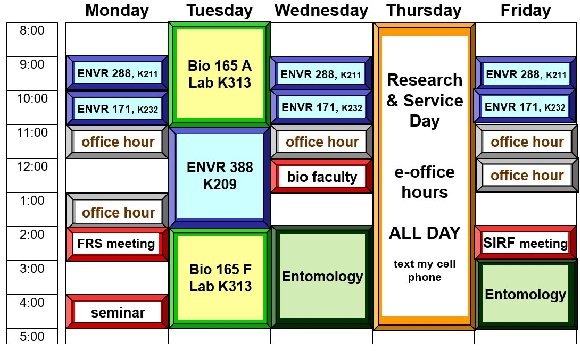
Courses Fall 2009 I teach a wide range of courses spanning freshman to senior years in biology, ecology, evolution, and environmental science.
This includes freshman biology lecture and lab, and upper division ecology, evolution, conservation biology, and animal behavior courses for
science majors. I also teach a Jr/Sr Values Seminar in Environmental Ethics, non-majors environmental science, and several courses in Widener's
program in Academic Service Learning.
Lastly, I teach or co-teach several courses in Science Education including Urban Ecological Education for Science and Education Majors (Envr288), and
Field Ecology for Teachers (ScEd 585) through Widener's Graduate School of Education. |
|
|
Additional Things I Do @ Widener
Service to Students:
|
|